I grew up in a tavern in Chesterland, Ohio, and started tapping kegs at eight years old. I began homebrewing in 1986 and have been building kegerators since 1993.
I’m not a scientist. I’m a tinkerer, hobbyist, maker, and craftsman with a day job that helps fund the things I love to build. I like understanding how something works, trying an idea, and learning from what happens.
KegCalc brings that curiosity and years of hands-on experience together to help you build your own setup and get a better pour.
My own projects, made for a good pour and good company.
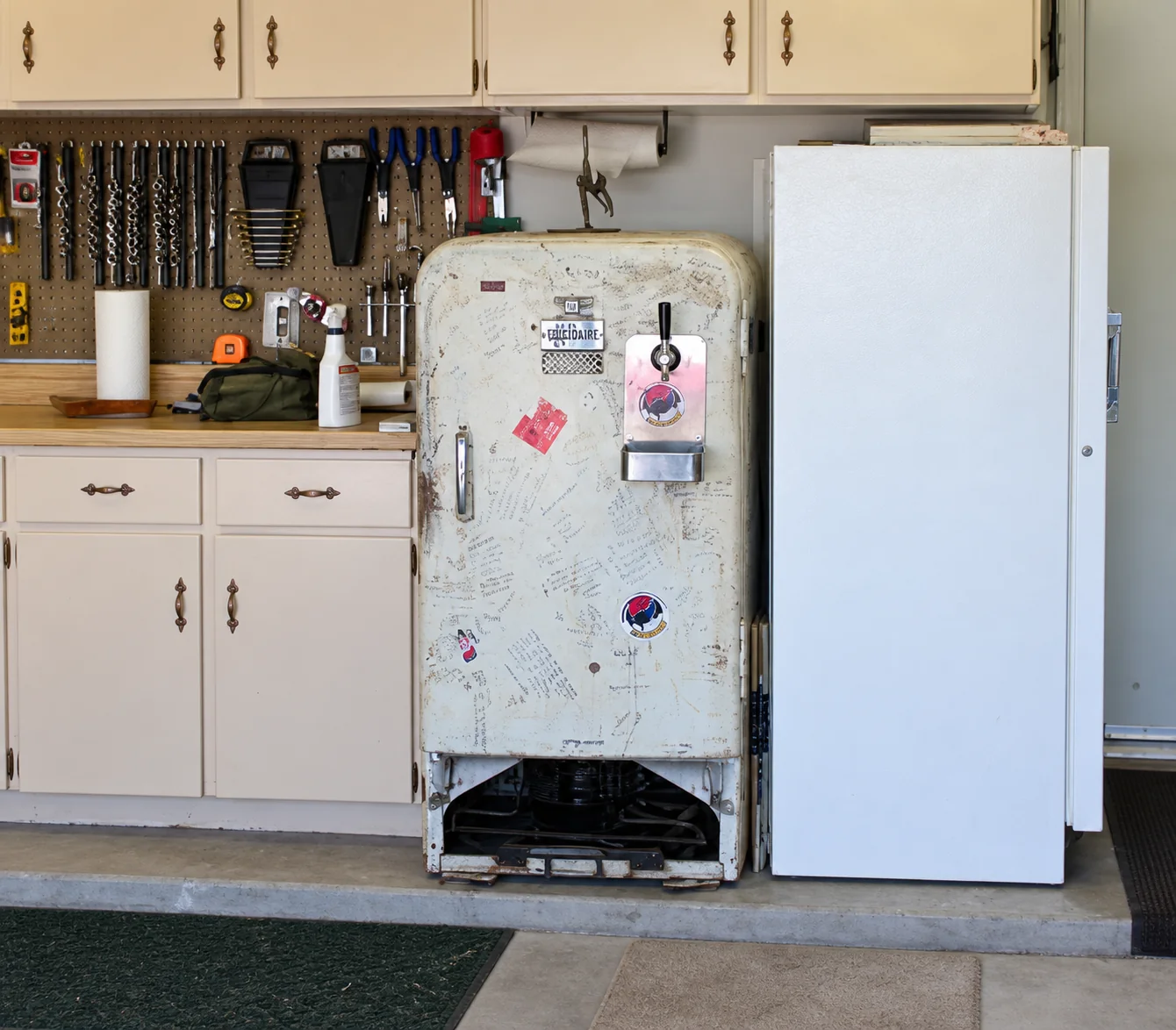
The garage find that stayed with me.
I found this GM Frigidaire in the back of the garage where I was living in college. It became my personal kegerator—a good example of why I like giving an old fridge another purpose.
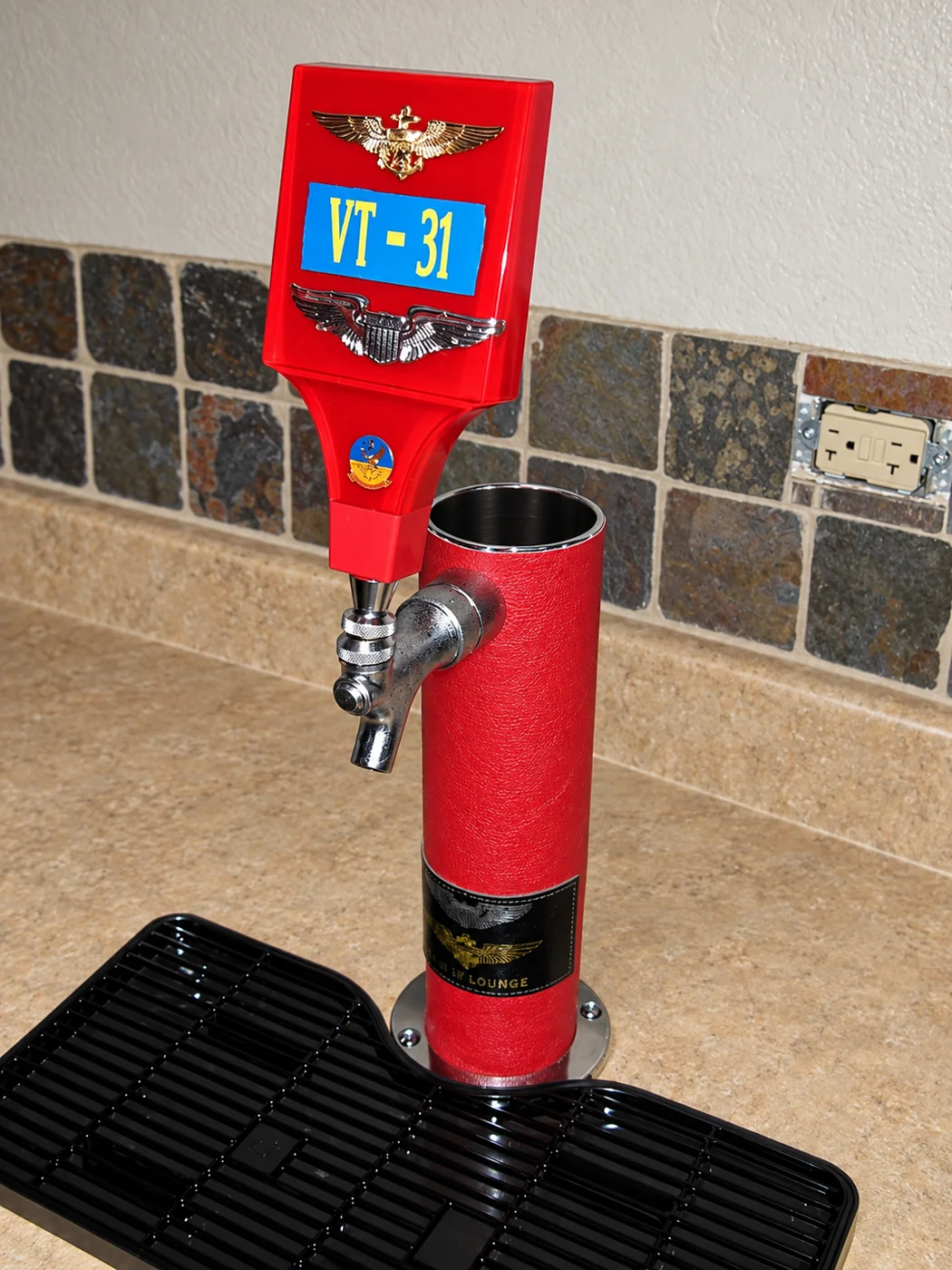
A tap for the squadron.
I built this kegerator for my flying squadron in the 2000s. The red tower and VT-31 handle gave it a place of its own.
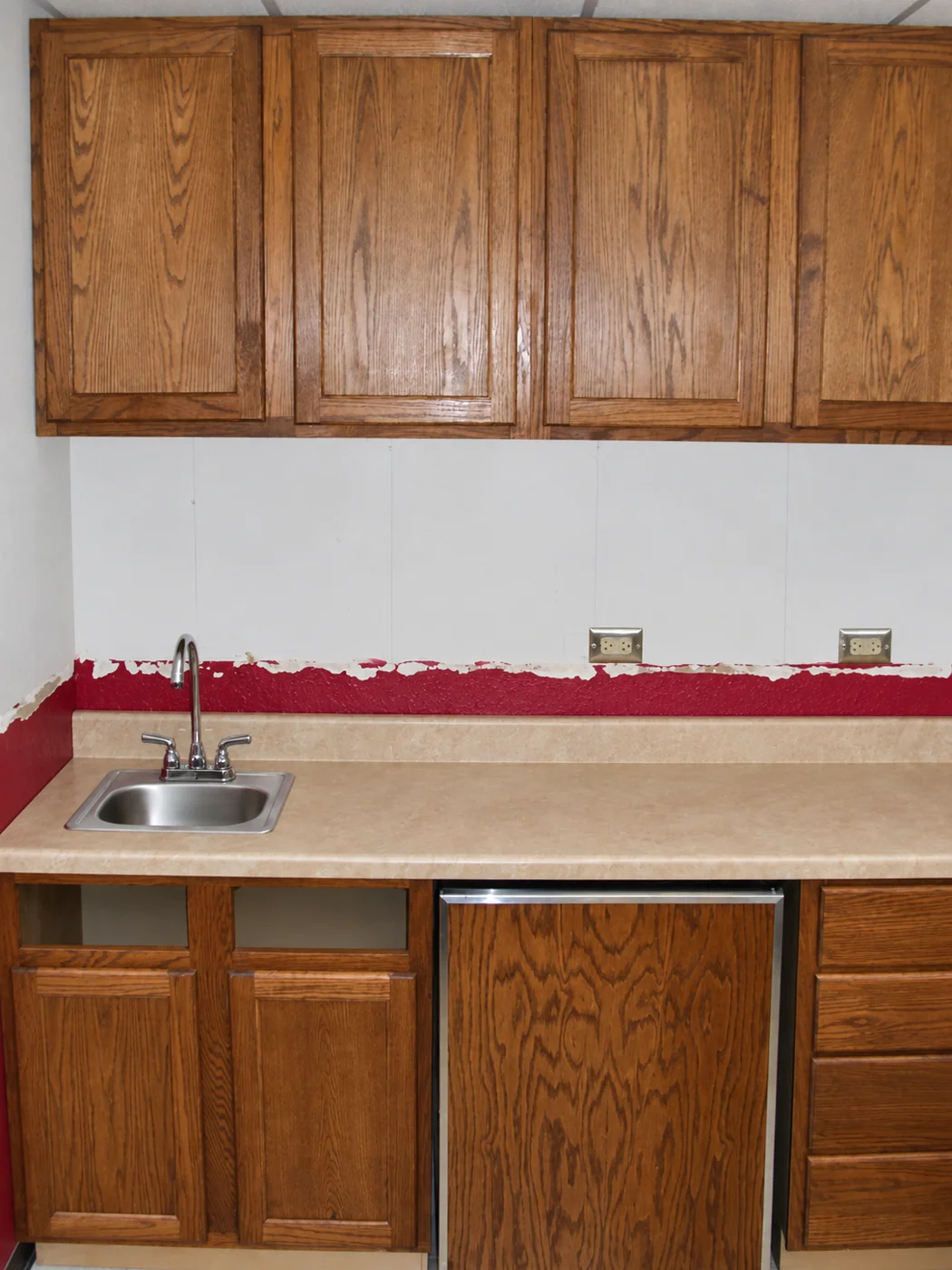
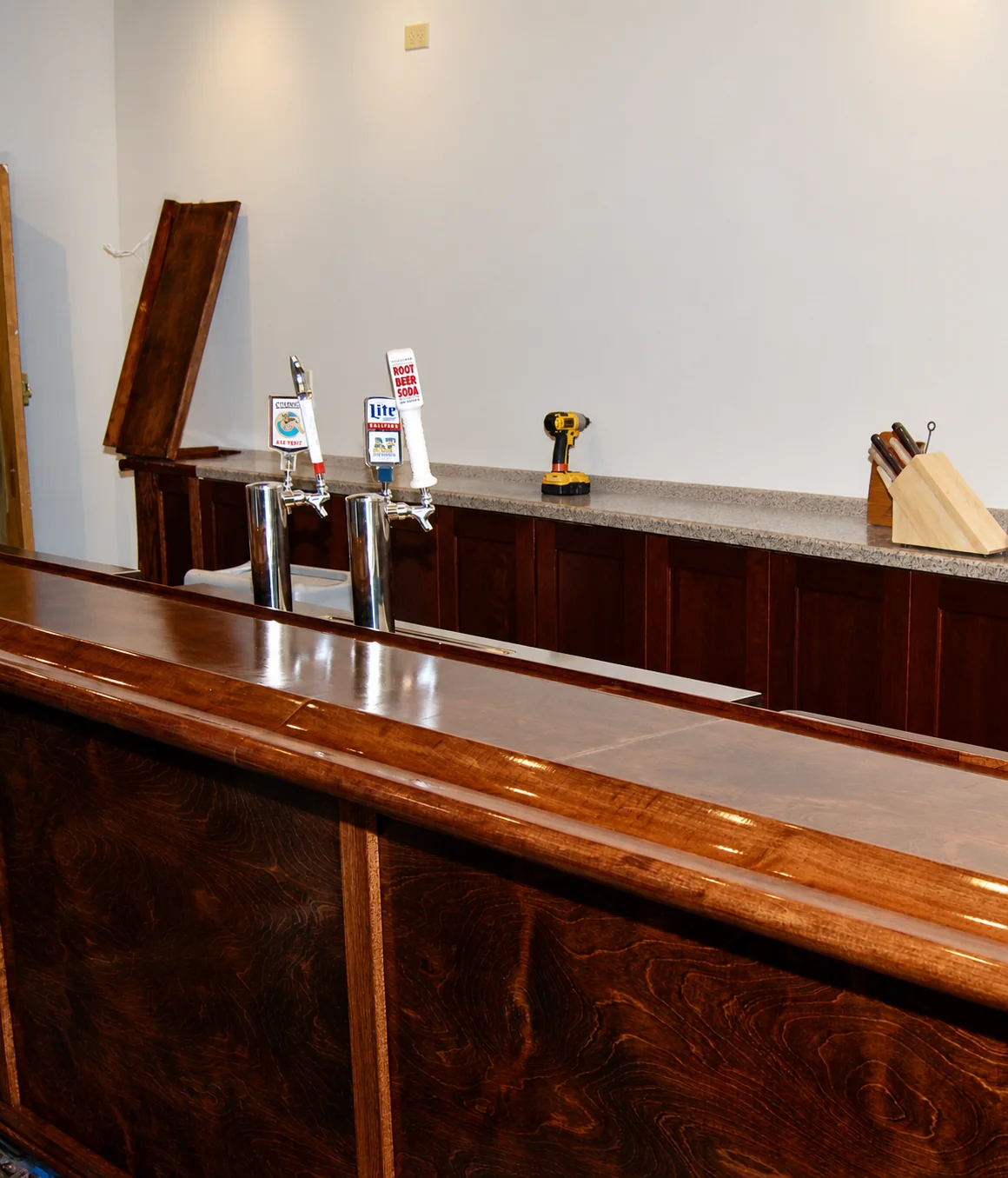
Before the first pour.
Another view of the same squadron project, with the wood-paneled kegerator fitted beneath the counter while the surrounding work was still underway.
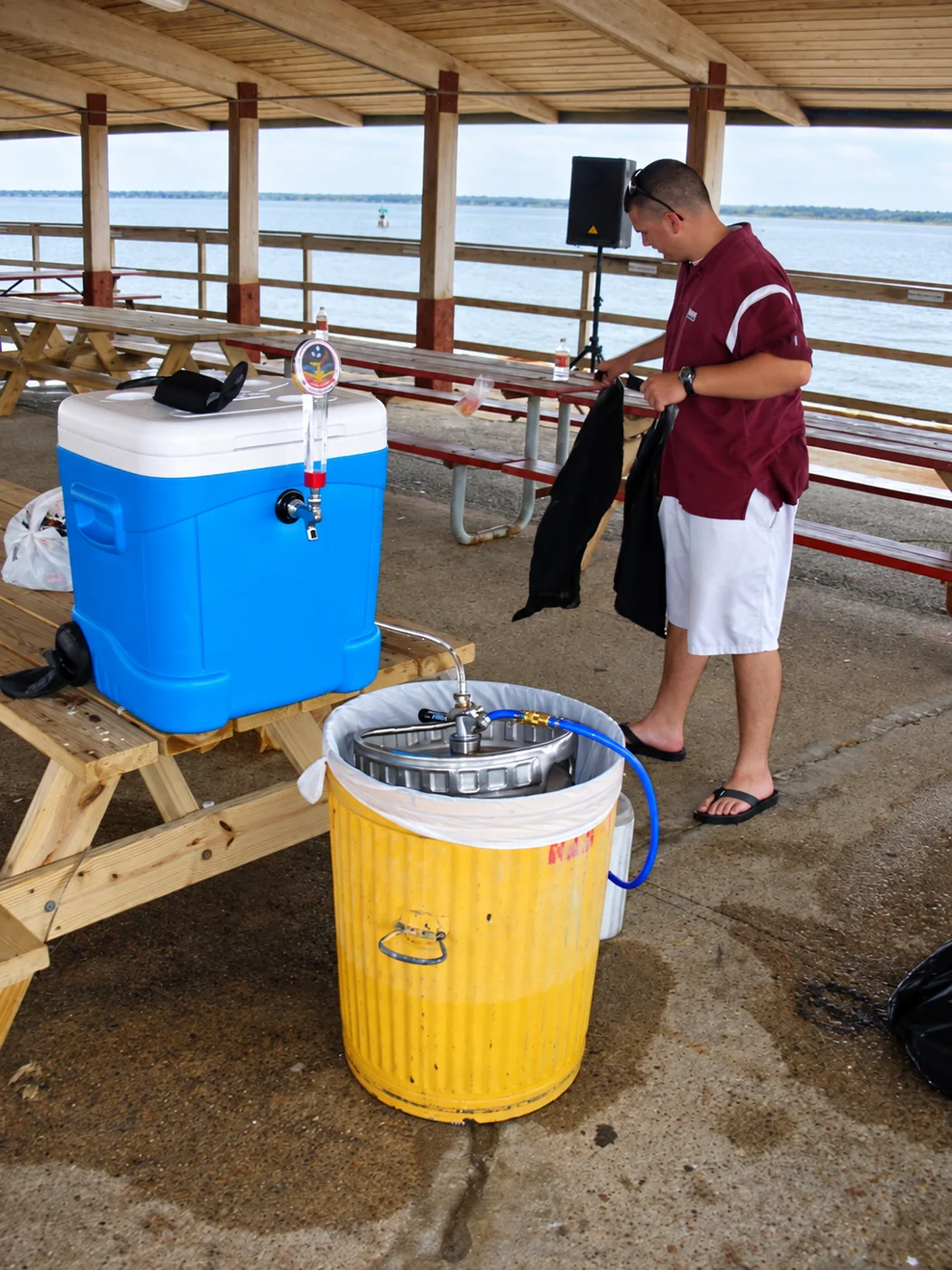
Built to take the gathering outside.
I built this cooler-based jockey box for squadron functions. Here it is set up at an outdoor gathering, with the cooler on a picnic table and the keg alongside it.
Another squadron bar takes shape.
343d Recon Squadron, Omaha, Nebraska, circa 2009. Another bar project underway, with the woodwork and draft towers coming together.
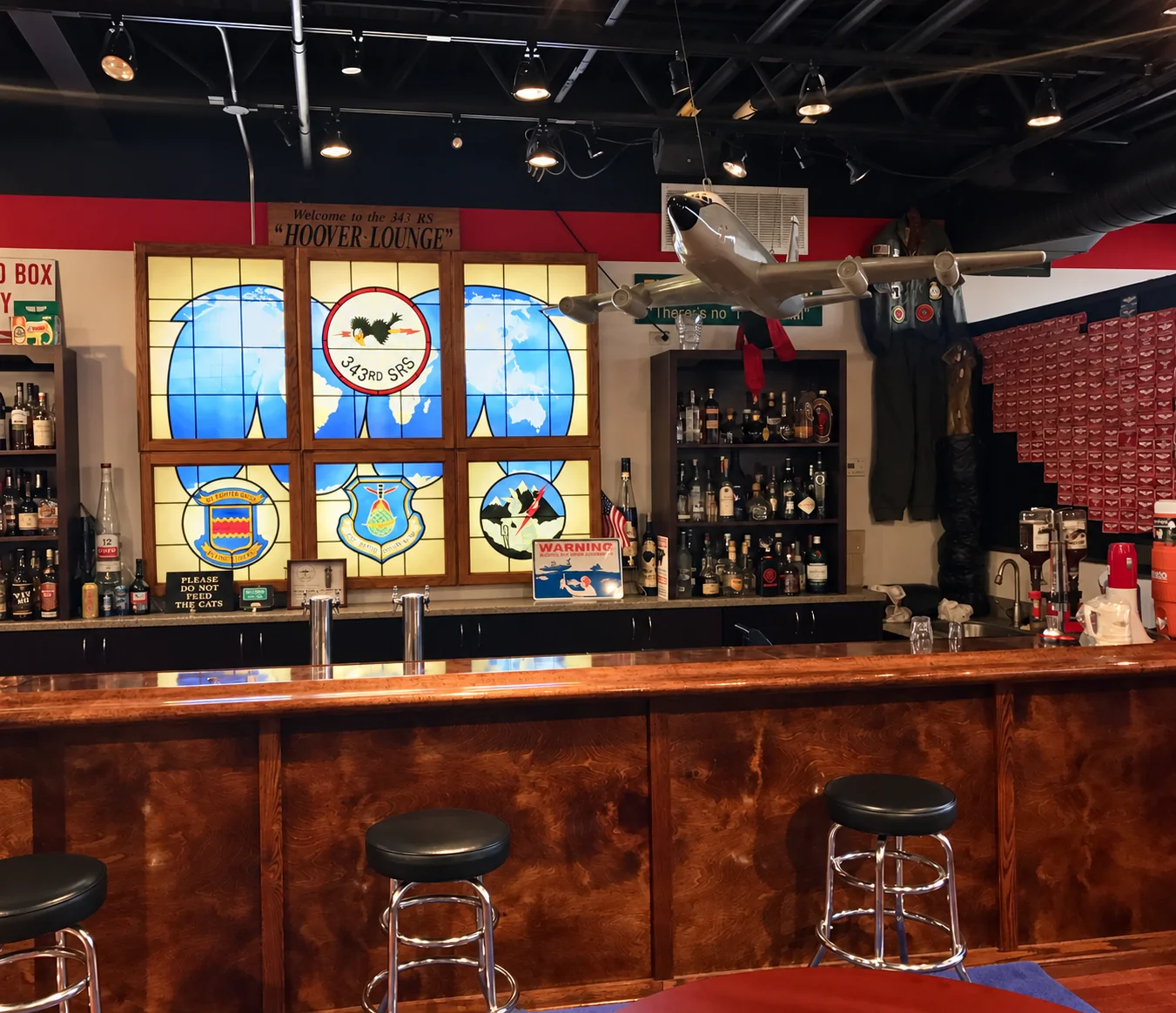
The Hoover Lounge.
A later view of the squadron bar, with its stained glass, aircraft model, and room full of aviation character.
Personal photos, retouched for clarity.
The math behind the pour.
KegCalc combines a temperature-and-carbonation equation for regulator pressure with a simple pressure budget for beer-line length. We account for faucet rise, reserve a pressure allowance at the faucet, and divide the remaining pressure by the tubing’s estimated resistance.
The calculation reference below records those equations, units, tubing presets, and assumptions from the September 13, 2026 app implementation. These are the core calculations behind KegCalc; app-specific controls and display rounding may differ from the website. The line estimate is a starting point to test and tune, not a full simulation of beer flow.
Charlie Papazian’s The Complete Joy of Homebrewing was the most technical book I read in high school. It helped spark a lifelong scientific curiosity: asking why, trying things for myself, and paying attention to the results. That way of thinking has stayed with me far beyond brewing.
My thanks to Papazian for that inspiration, and for the knowledge he shared in that book and its follow-up, The Homebrewer’s Companion. They helped make learning through hands-on work a lasting part of my life.
The PDF documents our implementation. We have not established that its exact equation coefficients originated in these books, so this acknowledgment credits Papazian’s brewing guidance rather than attributing an unverified formula to him.
When you buy through an affiliate link on KegCalc, I may earn a commission. That support helps fund the hobbies, experiments, and projects behind this site. Thank you for helping me keep building, learning, and sharing what I discover.
As an Amazon Associate I earn from qualifying purchases.
 KEG
KEG